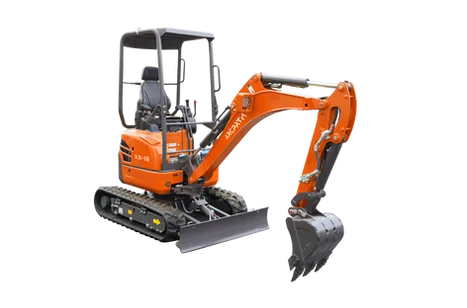
Choosing a compact excavator in Canada, including Québec, starts with the work and the attachments it needs. For a trench, consider the bucket; for post holes, the auger; for handling rocks or brush, the thumb or grapple. Machine weight helps organize the search, but the mount and hydraulics determine attachment compatibility.
Start with the site and operating weight
Record access width, digging depth, materials and the expected result. A landscaped yard, a utility trench and foundation excavation raise different questions. Identify the tools needed, then check the machine that will carry them. This keeps attachment selection at the centre of the decision.
The weight bands below organize that research; they are neither lifting capacities nor attachment fitment ranges. The final section combines the 5–6 and 7–8 metric ton classes in Bobcat's size guide. If your machine's weight falls between bands, review the questions in the neighbouring sections. For a specific model, consult its specifications and your carrier's actual configuration.
1–2 t: tight access and small landscaping jobs
For side yards, landscaping and small trenches, start by checking the route to the work area. Compare machine width with access and required depth with the model's specifications. A weight class does not establish whether an excavator can reach the site or complete the required digging.
Consider a narrow digging bucket for the trench and a smooth-edged grading bucket for finishing. A mechanical thumb holds rocks and brush against the bucket; a hydraulic thumb also needs a circuit to the stick. For posts or planting holes, consult the auger, then have the interface and hydraulic supply reviewed before selecting that combination.
3–4 t: residential construction, utilities and hardscaping
For foundation, utility or hardscaping work, compare operating weight with access, depth and reach requirements. Describe the recurring work and ground conditions. Do not choose a wider attachment simply because the machine belongs to a larger class: required trench width and the intended finish remain the starting points.
Digging and grading buckets remain tools to consider. For rocks, roots or landscaping blocks, examine the thumb and how it closes against the buckets used. The catalogue's grapple bucket is described for handling logs, debris and irregular material; its specification is for a mini track loader. The link helps define the task and does not confirm excavator fitment.
5–8 t: more demanding excavation and utility work
For larger excavations, utility installations and more extensive landscaping, examine this weight band as another carrier family to investigate. Check the site's requirements against the selected model's specifications. This section does not introduce an ArcPath machine range of this weight or assign additional capacity to an existing model.
Specify the bucket needed for digging or ditch cleaning, and the gripping work needed to move material. An auger for holes or a hydraulic breaker for demolition requires a review specific to the attachment and circuit. The published root rake is intended for roots, brush and site cleanup on a mini track loader; do not transfer its specifications to an excavator in this band.
Match the attachment to the mount and hydraulic circuit
Mount and quick coupler. Identify carrier attachment points and geometry, then the coupler type, adapter and locking method. The words “quick coupler” do not establish a compatible interface. Prepare known dimensions and a mount photo for the combination review.
Auxiliary hydraulics. Compare available flow, pressure and couplers with the attachment's requirements. A digging bucket does not need the same connections as an auger or hydraulic thumb. For a hydraulic breaker, request the proposed tool's circuit requirements: this page publishes no breaker specifications.
Weight and application. Describe the carrier, tool and materials together. Mount and hydraulic checks do not replace review of the intended work. The Canadian attachment buying guide explains that process; use it to prepare carrier information rather than infer fitment from tonnage.
Currently published attachment specifications list mini track loader as their carrier family. For an excavator, share the brand, model, interface, known hydraulic data and intended work through Find My Fit. Unknown fields can remain blank; the final response depends on the carrier information supplied.
Continue with the relevant resources
This page helps select a weight family and prepare the machine-attachment combination. The mini excavator attachments guide for landscaping and trenching goes further into buckets, thumbs and augers. The attachment directory provides the published tool specifications.
For sourcing context, also consult TerraX's guide to the origins of Canadian excavator imports. Import data does not measure sales in Québec or establish machine size. Keep carrier and attachment selection grounded in the site's requirements.
For attachment sourcing context, consult ArcPath's Canadian attachment import guide. Keep that research separate from the review of your specific carrier and attachment.
Frequently asked questions
What size compact excavator should I consider for a narrow yard?
Start with access width and working depth, then examine the 1–2 t class. Check each model's specifications: tonnage confirms neither access nor the ability to complete your job.
What compact excavator should I examine for utility work?
Compare the 3–4 t and 5–8 t bands against depth, reach, access and materials. Then describe the attachments needed. These bands organize research; they do not confirm an attachment or a specific working capacity.
What attachments should I consider for mini excavator landscaping?
A digging bucket suited to the trench, a smooth-edged grading bucket and a thumb for rocks or brush are starting points. Consider an auger for post or planting holes after checking the mount and hydraulics.
Do catalogue attachments mount directly on an excavator?
Currently published specifications list mini track loader as the carrier family. For an excavator, have the specific combination reviewed for mount, interface, hydraulics and application. Matching weight classes do not establish compatibility.
Does a quick coupler confirm that a bucket will fit?
Identify geometry and attachment points, the adapter and locking method. Share the coupler type or known dimensions alongside the carrier model so the combination can be reviewed.
What should I check before choosing an auger or hydraulic breaker?
Check flow, pressure and auxiliary couplers against the tool's requirements. The auger specification describes a mini track loader configuration. No breaker specification or automatic excavator compatibility is established here.
How do mechanical and hydraulic thumbs differ?
A mechanical thumb is adjusted by hand without hydraulic connections. A hydraulic thumb opens and closes from the seat and needs a circuit to the stick. In both cases, check how it closes against the buckets actually used.
What information should I prepare for a combination review?
Prepare the carrier brand and model, interface or known dimensions, flow and pressure if known, and the material and expected result. Unknown information can remain blank for the fitment review.